

So....how does a tube and joint system actually work?
The Basic Joint: Simple Engineering, Serious Strength
Tube‑and‑joint systems are known for being simple, strong, and endlessly adaptable; but what actually makes them work? Behind every workstation, trolley, rack or flow system built with modular tubes, there’s a clever mechanical principle that keeps everything secure, stable and easy to adjust.
The basic joints have a simple "toothed" arrangement that secure one side of the joint around the tube and are then held in place by a single M6 bolt secured using a 5mm allen key.
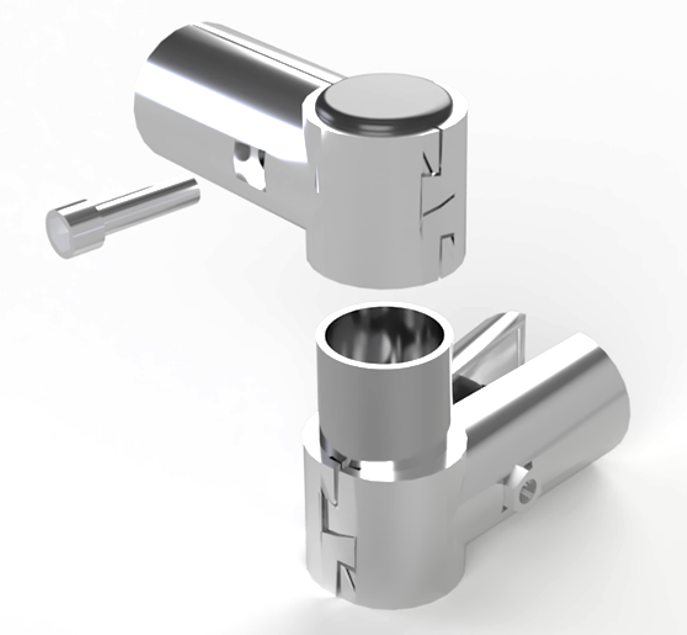
They are as simple as that but sometimes simple is the best solution.
Load Capacity: How Much Weight Can a Joint Handle?
When torqued correctly each joint has a vertical loading of 85kg and horizontal loading of 75kg. This means that on a rack or trolley comprised of 4 joints each shelf can technically hold 340kg!
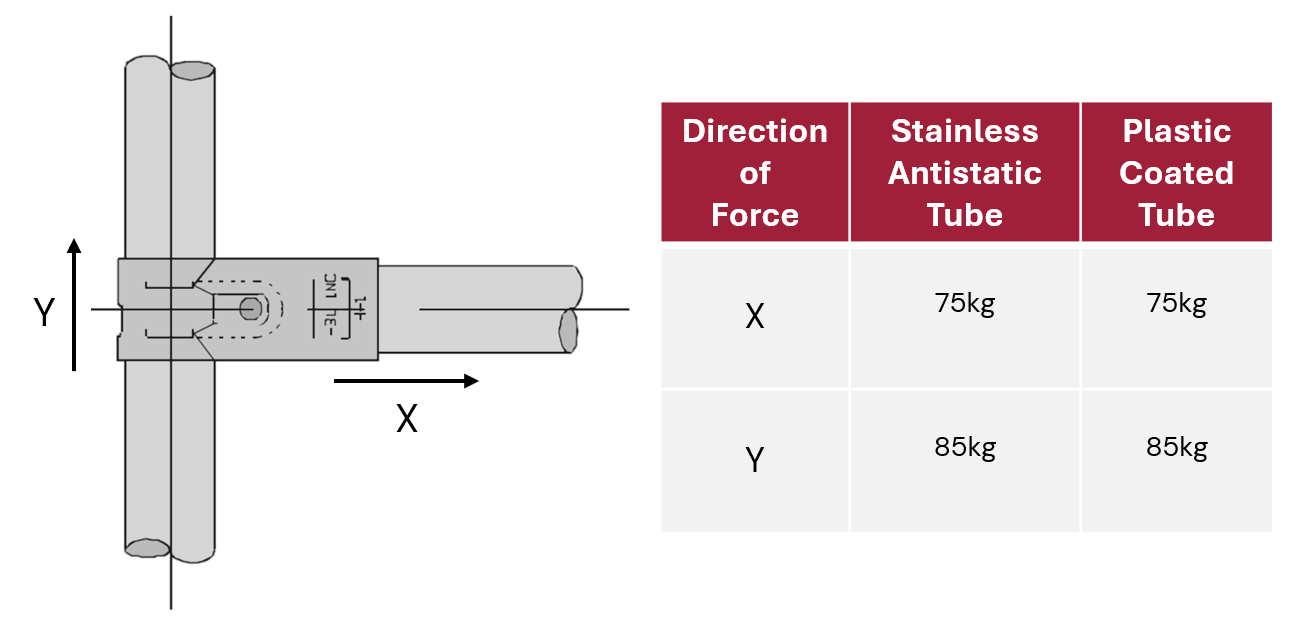
When designed correctly tube and joint systems can be as strong as fabricated products of the same material but infinitely more adjustable and easier to assemble.
You get the strength of steel fabrication without the limitations of fixed welds or permanent structures.
It’s strength plus flexibility something traditional fabrication simply can’t match.
Where Tube‑and‑Joint Systems Are Used
Tube‑and‑joint systems are the backbone of multiple lean solutions. Here’s how they apply across your product range — with link placeholders so you can insert your URLs.
1. Modular Workstations - Perfect for assembly, inspection, packing and engineering environments.
- Adjustable heights
- Custom tool storage
- Integrated flow lanes
- Ergonomic layouts
2. Gravity Flow Racks - Tube‑and‑joint systems support roller tracks, FIFO lanes and high‑density picking systems.
3. Picking & Kitting Carts - Lightweight, manoeuvrable and built around operator movement.
4. Heavy‑Duty Fabricated Solutions - Even fabricated products often integrate tube‑and‑joint elements for adjustability.
5. Lean Storage & 5S Systems - Shadow boards, tool stations, mobile storage and visual management setups.
How Complete Lean Tube Works as a Business
At Complete Lean Tube, every project begins with understanding how a customer’s process actually works. We look closely at operator movement, takt time, product flow, ergonomics and the physical constraints of the space, then design systems that fit naturally into that workflow. Nothing we build comes from a catalogue - each solution is engineered around real operational needs.
Our tube‑and‑joint systems are used across manufacturing, aerospace, automotive, pharmaceuticals, warehousing, logistics and FMCG. Each sector has its own pressures and priorities, so every structure we create is tailored to the environment it serves, whether that’s an adaptable assembly workstation, a precise kitting rack or a cleanroom‑ready solution.
Continuous improvement sits at the heart of what we do. Because our systems are modular, customers can evolve their layouts as processes change. Structures can be adjusted, expanded or reconfigured without starting again, allowing operations to grow, adapt and refine over time. This flexibility is what makes Complete Lean Tube a long‑term partner rather than a one‑off supplier.
If you have any questions or want to run an idea past us we're more than happy to discuss how the tube and joint system works and could help your operation. Get in touch with us today or download our catalogue here.
Complete Lean Tube
sales@completeleantube.co.uk t: 01949 358 758
Operating Hours: Mon to Fri 9am-5pm
Unit 6, Barbrey Business Park, Orston Lane, Bottesford, Nottingham, NG13 0GY